
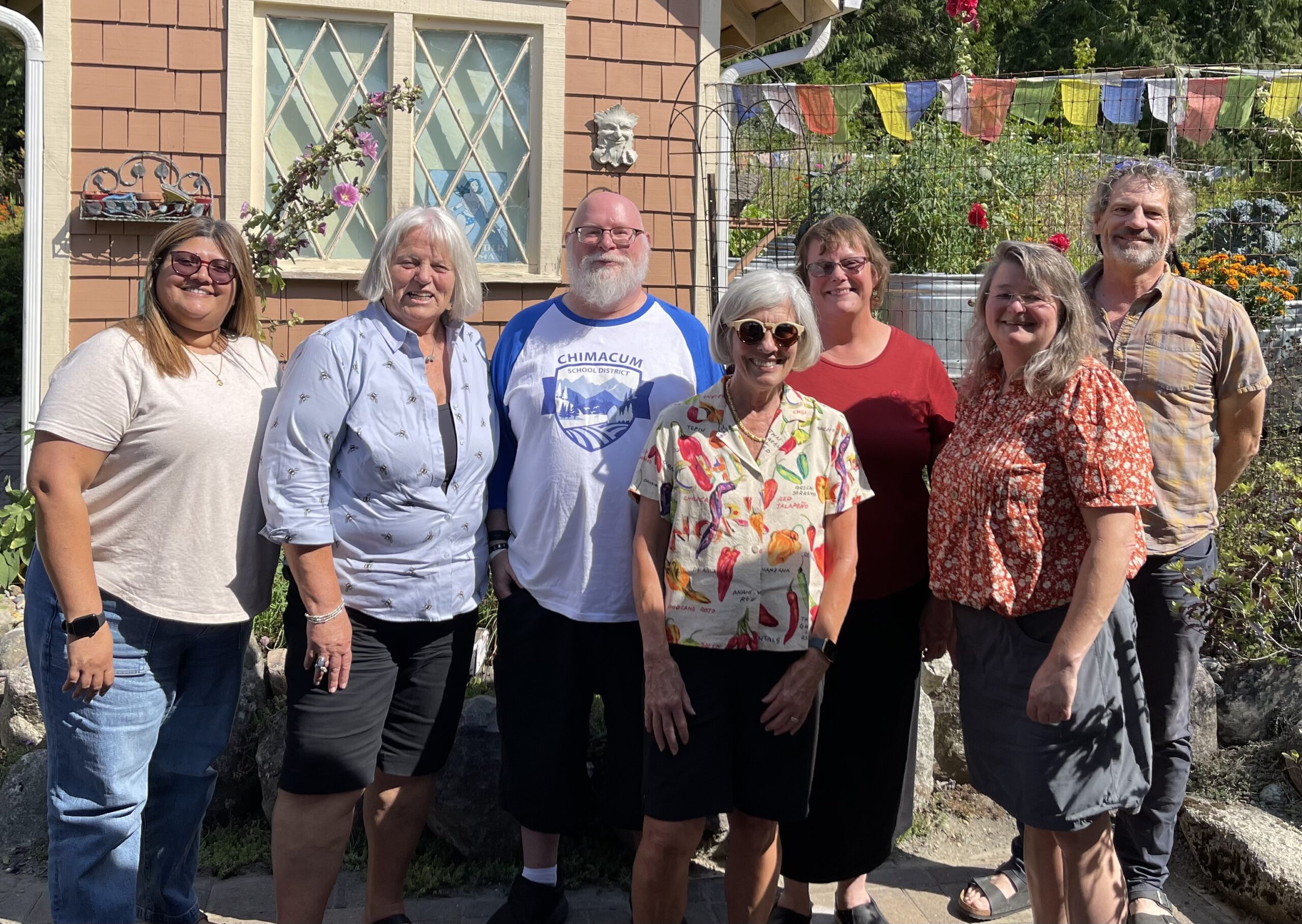
With a relentless focus on engagement, the Chimacum School District has improved student attendance, academic achievement, behavior, and community support. The district nestled in the scenic Olympic Peninsula is WSSDA’s 2025 Board of the Year, Small-Sized District.
‘Relentless Focus’ Brings Results
Chimacum leaders and staff credit their gains in school climate, discipline, and achievement to persistence and paying attention. Board members believe students are successful when their needs are met and barriers are removed.
Superintendent Scott Mauk acknowledges the school board’s “gentle, relentless focus” on drivers that would meet students’ needs and lead to change. Improving attendance, reducing disciplinary incidents, and increasing engagement are among the board’s priorities.

“We’ve had to have hard, brainy conversations. The board is always working to get it right,” Mauk said.
Data Opens Doors to Progress
In the past, publicly sharing and discussing academic achievement data wasn’t part of the Chimacum district’s culture. One goal of Board Chair Roxanne Hudson, Ph.D, was for the group to review data and share information more clearly with the community.
Data sharing has helped build engagement and trust, Hudson said. To ease the transition to more transparency, the board chose to share data focused on growth rather than achievement level.
Ongoing equity audits over four years highlighted three groups that needed more support: male students, students with disabilities, and those living in poverty. Those populations were not finding success in Chimacum’s system, so board members, school leadership, and staff committed 18 to changing that.
Here’s a sample of their actions:
- Teachers helped develop and implement interventions to engage all students.
- Early childhood programs expanded. Transitional Kindergarten began, and free preschool services were supported through fundraising.
- More professional development opportunities for staff include Universal Design for Learning, wellness, social and emotional learning, new core curricula adoptions, and support systems in academics and behavior.
- An inclusive educational program emphasizes students receiving the education they need as much as possible in the general education classroom.
- Strategic community partnerships have broadened access to resources, cultural knowledge and opportunities.
In the past four years, attendance has been up, discipline rates have been down, and achievement has improved. Hudson said students are finding success and a greater sense of belonging. “But more than that, kids are smiling and happy and enjoying school,” she said.
 Make Every Moment Engaging
A common denominator for the success is student engagement. Board member Kathryn Lamka noted that engagement is at the core of the board’s five strategies: relationships, instructional quality, inclusion and belonging, wellness and collaboration. “If we continue to measure these things and track our progress, we’ll be successful,” Lamka said. Superintendent Mauk makes student engagement a focus of his work. For example, he frequently has informal conversations with students and shares short videos as part of his weekly social media posts to the community
“If we continue to measure these things and track our progress, we’ll be successful,” Lamka said.
Superintendent Mauk makes student engagement a focus of his work. For example, he frequently has informal conversations with students and shares short videos as part of his weekly social media posts to the community.
“From the time students step on the bus in the morning, we want to make sure every moment is cool, fun and engaging for them,” Mauk said.
Supporting young men is especially important, he added. Jefferson County has the state’s highest rate of young adults ages 18-24 who aren’t working, attending school or serving in the military. “We want to do what keeps kids excited, so they cross the graduation stage with a diploma and a plan.”
Success Begins in Early Education
Chimacum leaders identified high-quality early education as one way to improve student engagement and outcomes. Early intervention is often the key to later success.
“Because we are in a child care desert, we see ourselves as an important part of efforts to improve early childhood outcomes,” Mauk said.
Chimacum implemented transitional kindergarten in 2023 and free preschool in 2022. Through both programs, the district’s WA Kids scores markedly improved, increasing from 17% kindergarten-ready in 2022 to 83% in the fall of 2025.
Among students living in poverty, kindergarten readiness increased from 8% to 71%. Students with disabilities improved from 20% to 40% readiness.
Across-the-Board Growth in English Language Arts
In its Board of the Year application, Chimacum shared student achievement growth in English Language Arts as a reflection of its success.
Chimacum Creek Primary School (pre-K to grade 1) uses Dynamic Indicators of Basic Early Literacy Skills (DIBELS) to measure alphabet, reading and other skills. At the end of 2024, kindergarteners were in the 84th percentile for growth. First graders were in the 74th percentile for growth, up from 44th for first grade in 2023.
Chimacum Elementary School (grades 2-6) assessments showed growth in students’reading skills as measured by MAP (Measures of Academic Progress) computer-based tests and Smarter Balanced Assessment Consortium (SBAC), the state-required standardized tests.
Chimacum Junior-Senior High School monitors growth through MAP testing, final exams and other assessments. Tenth graders taking the SBAC scoring above Level 3 in English Language Arts showed impressive growth from 2024 to 2025: Females improved from 40% to 51%, and males improved from 31% to 36%.
The school board’s focus on responding to data has improved other measurements as well:
- Disciplinary incidents have declined steadily since 2018. Suspension rates for low-income students were reduced by more than half.
- Ninth-grade boys passing all their classes increased from 70% (2020) to 83% (2024). Among all ninth graders, 78% passed all classes in 2024, up from 65% in 2020.
- Enrollment in dual-credit classes doubled in a five-year span. In dual-credit courses, students earn high school and post-secondary school credit.
Unified Policies Allow Autonomy
To move the board’s initiatives into practice, the district established leadership coalitions at each school. These groups of committed administrators, teachers and staff have some autonomy in deciding how to implement districtwide policies and procedures at the building level. While the district has one shared purpose, promise, strategic plan and even a common student handbook, each school’s leadership team has some decision-making flexibility, Mauk said.
The autonomy within each building increases the opportunities to customize engagement approaches. Enhancing that approach, Chimacum leverages its small size to know students by name, strength, and need throughout their school experience.
 Board Members Continue to Learn
While relentlessly working on behalf of Chimacum students, the board members also invest in their own professional development to be more effective. All board members take the state-required equity trainings and attend the annual WSSDA conference. At the conference, they participate in the legislative advocacy pre-conference, Law Conference and Board Boot Camp to strengthen their governance skills, deepen their policy understanding, and promote student-centered legislative priorities.
Every August, they participate in a local board retreat, where the group sets goals and direction for the coming school year. The retreat includes equity-centered learning and exercises to help them grow as a group. Through monthly discussions of a common reading, they hope to improve their knowledge of how to engage all students and the community.
Equity conversations are also ongoing and embedded in every board decision. These discussions led to policy updates on wellness, social and emotional learning, and inclusiveness practices.
Communication is a Catalyst
Board members are strengthening ties with the community, too. Their monthly meetings often include an hour-long roundtable discussion with five community partners. Attendees get to know each other and find opportunities to support students and families. Mauk said these conversations have been catalysts for connecting community partners who haven’t met each other before.
The district has also deepened its partnership with the Chemakum Tribe, whose cultural knowledge enriches learning and community connection.
In recent years, the district has brightened its reputation by finding and sharing positive stories. Residents have approved levies in back-to-back years, news coverage been more positive, and Mauk’s video updates on social media have contributed to Chimacum’s upswing.
In closing, Mauk encourages all board members to look at relevant aspects of the Chimacum board’s model to emulate.
“Move resources where needed and work on policies that matter,” he said. “Don’t spin your wheels doing something that won’t make a difference.”

This article originally appeared in the Winter 2025 issue of WSSDA Direct. Visit wssda.org/direct to see all the latest issues of WSSDA’s newsmagazine.