
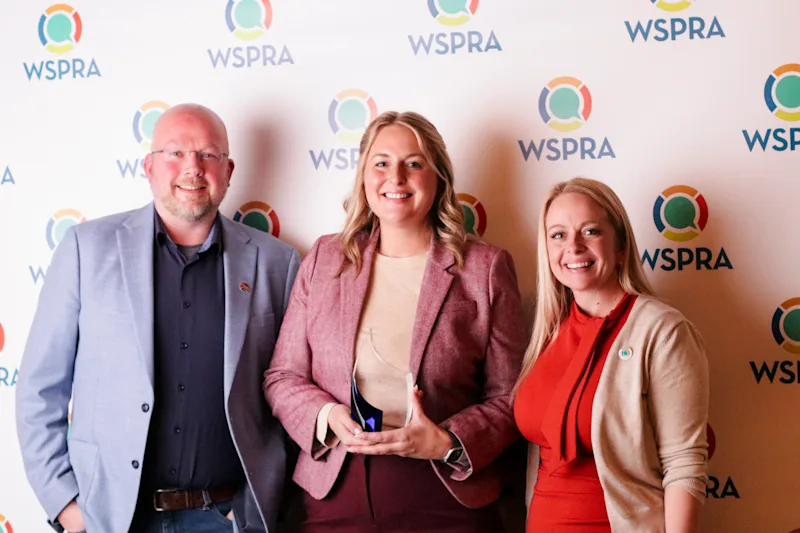
From left: Curtis Campbell, WSPRA Past President, Tove Tupper, APR, Chief Communications Officer for Highline School District, and Jessica McCartney, WSPRA President.
In January, long before we see them in our rivers, some salmon have already begun their journey home. They don’t wait for perfect conditions. They move steadily with purpose, preparing for the work ahead.
Strategic school communication works the same way. Our most important work happens before anyone sees it—setting direction, anticipating challenges, and preparing the ground for what’s to come.
Public education faces significant challenges: declining enrollment, tight budgets, and political strife to name a few. In this environment, communication isn’t a soft skill—it’s essential infrastructure that fortifies your district’s reputation, stabilizes your community during crisis, and builds the public support you need to govern effectively.
Strong communication strategy helps you:
- Prevent crises before they escalate by getting ahead of concerns with transparent, timely information
- Strengthen levy and bond campaigns through sustained community engagement and trust-building
- Counter misinformation with clear, consistent messaging across all channels
- Navigate controversial policy decisions—from boundary changes to curriculum updates—with stakeholder engagement that reduces conflict
- Tell the truth about public education when negative narratives dominate headlines
Communication is not an add-on after decisions are made. It is strategic work that shapes how your communities understand who you are, what you do, and what the district stands for. At a time when public education is under intense scrutiny, what we communicate and how we communicate it matters more than ever.
The most effective school boards recognize that communication professionals are strategic partners, not just publicity departments. They bring expertise in crisis management, change leadership, and community engagement that directly supports governance priorities.
Across Washington, school communication professionals—including members of the Washington School Public Relations Association (WSPRA)—are working alongside you, stabilizing conditions, building trust, and keeping communities connected to their schools.
For smaller districts without dedicated communication staff, WSPRA offers resources and support that superintendents and key staff can access.
School boards and superintendents have a powerful role to play. Your active participation in amplifying positive stories of innovation, student success, and educator dedication creates a counterweight to mis-informed critiques of public schools. Positive stories must remain a steady drumbeat.
Like salmon returning upstream, this work requires persistence through cold water and strong currents because the way we communicate today will create steadier waters for the students who follow.
The question for boards: Are you positioning communication as the strategic asset your district needs right now?

About this Article
Written by Tove Tupper, APR, the Chief Communications Officer at Highline Public Schools. Tove received the 2025 Communicator of the Year award from the Washington School Public Relations Association, a nationally recognized professional organization of K-12 education professionals that strive to improve communication among all stakeholders in Washington‘s public school systems.
This article originally appeared in the Winter 2026 issue of WSSDA Direct. Visit the WSSDA Newsmagazine to see all the latest issues of WSSDA’s newsmagazine.