Written by:
Theresa Tanner, Social Media/Marketing Specialist
Ryan Lancaster, Executive Director of Communications at Spokane Public Schools.
In February 2024, Spokane Public Schools (SPS) failed its first bond in more than 50 years.
While the $200 million bond garnered 56% support, it fell four percentage points short of the supermajority threshold required for passage. According to Washington Investing in Schools and Education, SPS was one of 116 school districts whose bonds earned more than 50% approval but still failed in the last decade.
For SPS, the 2024 try was the latest in a string of “business as usual” bonds that asked voters to approve more than $1 billion in facilities investments through five ballot measures since 1998.
Our district, which serves 29,000 students in 58 school buildings, had always touted this long-range plan as a way of keeping tax rates stable while addressing aging facilities and responding to 21st century needs.
But in community listening events and a post-election survey, voters explained why that message no longer resonated. While we asked for more money, they were seeing their property values — and the taxes associated with that value — skyrocket, some as much as 30-40% in less than 10 years. The cost of living and inflation were also on the rise as wages remained stagnant.
The notion of “doing it for the kids” was no longer enough, especially amid growing distrust of government institutions in a volatile political climate.
Our community was increasingly asking, “What’s in it for me?”
We needed a new message that showed we were thinking differently and recognizing our community’s financial reality.
As district leaders re-grouped and re-evaluated a future bond proposal, an idea sparked in conversation with Spokane Parks & Recreation (Parks).
SPS has a longstanding partnership with Parks, established 50 years ago, with joint use agreements. Many of our schools are built adjacent to public parks, and both SPS and Parks “trade spaces” for activities, with schools using park fields for after-school sports and Parks adult recreation leagues using school gyms for court sports.
In a post-COVID world, both SPS and Parks saw a huge increase in demand for these kinds of activities. People of all ages were longing for in-person connection, and SPS also observed the positive effects of youth participation in sports and clubs — better attendance, fewer behavior incidents, and improved academic results.
But our ability to meet this need was hindered. We were running out of space, especially in a city with a four-season climate. Neither SPS nor Parks has enough indoor facilities to offer year-round programming, and our grass fields have limited seasonal use.
Since adopting a new Master Plan in 2022, Parks had been searching for the right time to present a ballot measure for a 20-year levy that would jumpstart improvements across the city’s existing 105 park properties and create green spaces in underserved neighborhoods.
After several delays to avoid competing with other ballot items, Parks proposed a $240 million levy specifically placed alongside another tax ask: a new version of the $200 million school bond.
SPS superintendent Dr. Adam Swinyard and Parks director Garrett Jones were the co-leaders in developing the proposal we called Together Spokane. They determined that by working together to utilize land, infrastructure, resources, and programming, we could accomplish everything SPS needed — like two elementary school rebuilds and a new 4-year trades high school — as well as everything Parks needed — including replacing or renovating playground structures and restroom facilities in all 87 developed parks.
Together Spokane would also fund additional joint projects, including a public indoor aquatics center, an indoor recreation center, all-weather lighted fields to serve all five of our comprehensive high school neighborhoods, and much more.
Every school, every park, and every neighborhood would see the impact, which was a much better value proposition than “do it for the kids.”
What’s more, we could accomplish all this (at a rate of $0.29 per $1,000 of assessed property value rather than the $0.31 per thousand that voters would have seen if the measures were not aligned) through innovative solutions, like building a recreation center connected to one of our elementary school rebuilds.
Seventy-seven-year-old Madison Elementary School is adjacent to Franklin Park, a 44-acre city park in need of field improvements and other enhancements for public use. With SPS and Parks working together, we can rearrange the placement of the school on Parks land and build the school with an attached multi-functional field house. Madison will use one of the field house gyms, which would be safely isolated from other courts during the school day, and could be opened up during the evenings and weekends for Parks recreational leagues or tournaments.
The creative collaboration didn’t stop with civic institutions. Swinyard and Jones saw an opportunity to invite organizations like the Boys & Girls Club of Spokane County, the Spokane Hoopfest Association, and Pacific Northwest Qualifier to contribute funds and/or programming to the project in exchange for priority use. All told, these partnerships would bring $11 million to Together Spokane projects that would not come from taxpayer pockets.
This is one of many examples that demonstrate how, by aligning our resources and extensive cooperative planning, every taxpayer dollar can go further, and our community spaces can serve more people, more often.
SPS and Parks first presented Together Spokane in February 2025 as a recommendation for more than 200 proposed projects resulting from a study of schools and parks. At that time, resolutions for the ballot measures had not been adopted by the SPS School Board of Directors or the Parks Board; Spokane City Council would also need to approve putting the Parks levy to voters.
We shared the proposal before either resolution was finalized for several reasons.
First, a February launch allowed us more time to share information about the proposal with our community and to explain the complex funding models that would bring these assets to Spokane. With this timeline, we had three additional months to engage with our community than if we had waited until both board resolutions were adopted in May.
Speaking of engagement, the proposal also allowed board members to receive feedback from the community and evaluate needs before making a final decision on whether, how, and when to run a ballot item.
Finally, as we shared information about Together Spokane, other organizations caught wind of the unique proposal and brought us ideas for public/private partnerships. We were able to incorporate those opportunities into the final plan, and our coalition of partners continued to grow.
After the launch, we spent eight months sharing information at town hall events, through video testimonials, and during biweekly media briefings that focused on the unique projects and opportunities.
We created an in-depth website, TogetherSpokane.org, to explain every project and the complicated finances associated with public bonds and levies. We never shied away from the reality that this was a tax increase because we wanted citizens to ask themselves a question:
“Does this project save me money, or do I think it’s worth my dollar?”
That was our way of answering their underlying question, “What’s in it for me?”
Does it save you money if your family can participate in a baseball tournament at a local multi-field facility rather than traveling to another city? Is having a park within a 10-minute walk of your house worth your dollar?
When presented with Together Spokane, our community said yes. Both measures were approved by voters in November 2025, with the school bond receiving 61.82% approval and the Parks levy passing with 55.8% support.
When the “business” of school bonds changed, Spokane’s model of collaboration, innovation, and transparency resonated with voters.
The future of public financing isn’t in silos. It’s together.
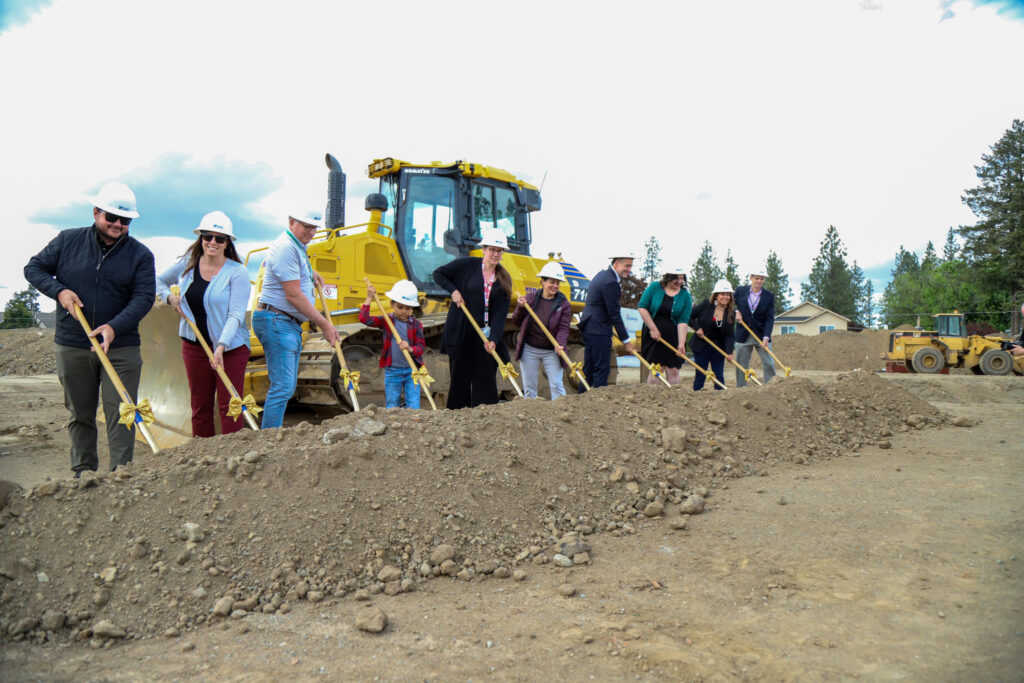
And the collaboration continues, as SPS and Parks leaders share timelines and updates with our respective boards, on our website, and in the media as projects break ground. We continue to explore partnership opportunities with public and private institutions to develop innovative solutions, so we can serve more community members with cautious stewardship of the public dollars they have entrusted us with.